Photos
Videos
Black Fishbone Galaxy
$15.00
In stock
Juveniles are young shrimp — they travel best at this size, and many strains only show their full colour as they mature. After display-ready adults? Contact us.
Save 15% on 20+ · auto in cart
Pay in full · save 5%
Buying several, or after a particular grade?
Make an offer
You’ve already made an offer on this one
We take one offer per item per day, and yours is already with us — we read every offer ourselves and reply by email, usually within a business day. You can send a new offer on this item tomorrow. Need to add or change something now? WhatsApp us and mention your offer.
Pre-order — this line is between batches. Order now and we'll ship when the next batch is ready. Most pre-orders ship sooner — 21 days is the longest you'd wait.
Sold out — check back after the next batch, or use the notify tab for a back-in-stock email.
Description
Black Galaxy Fishbone Shrimp (Caridina) | Single Grade Colony
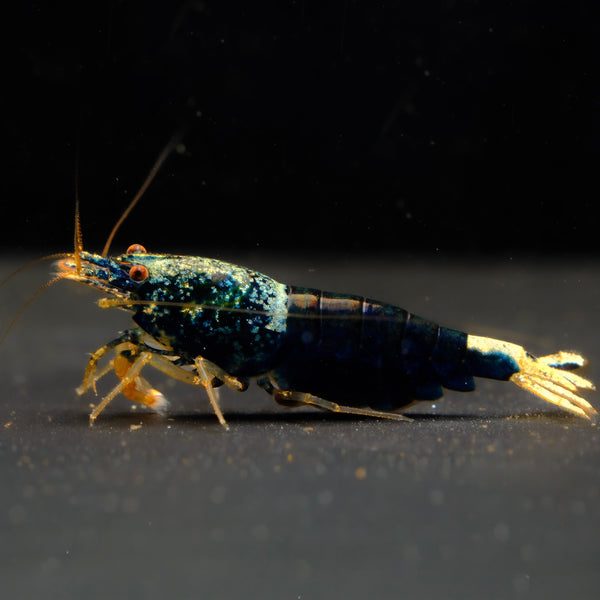
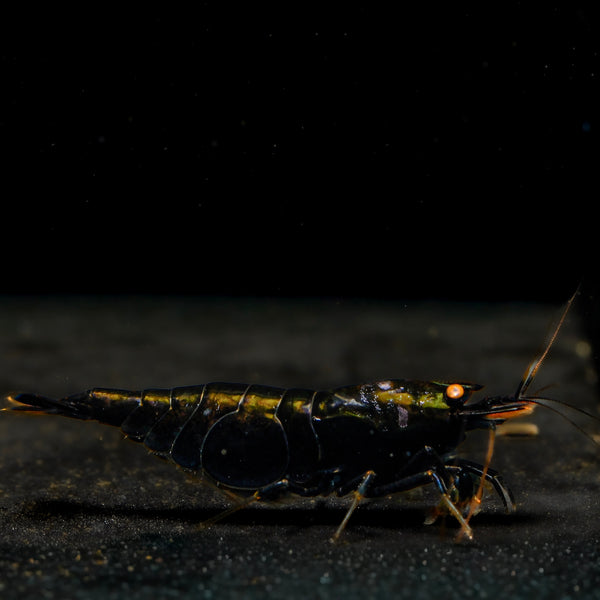
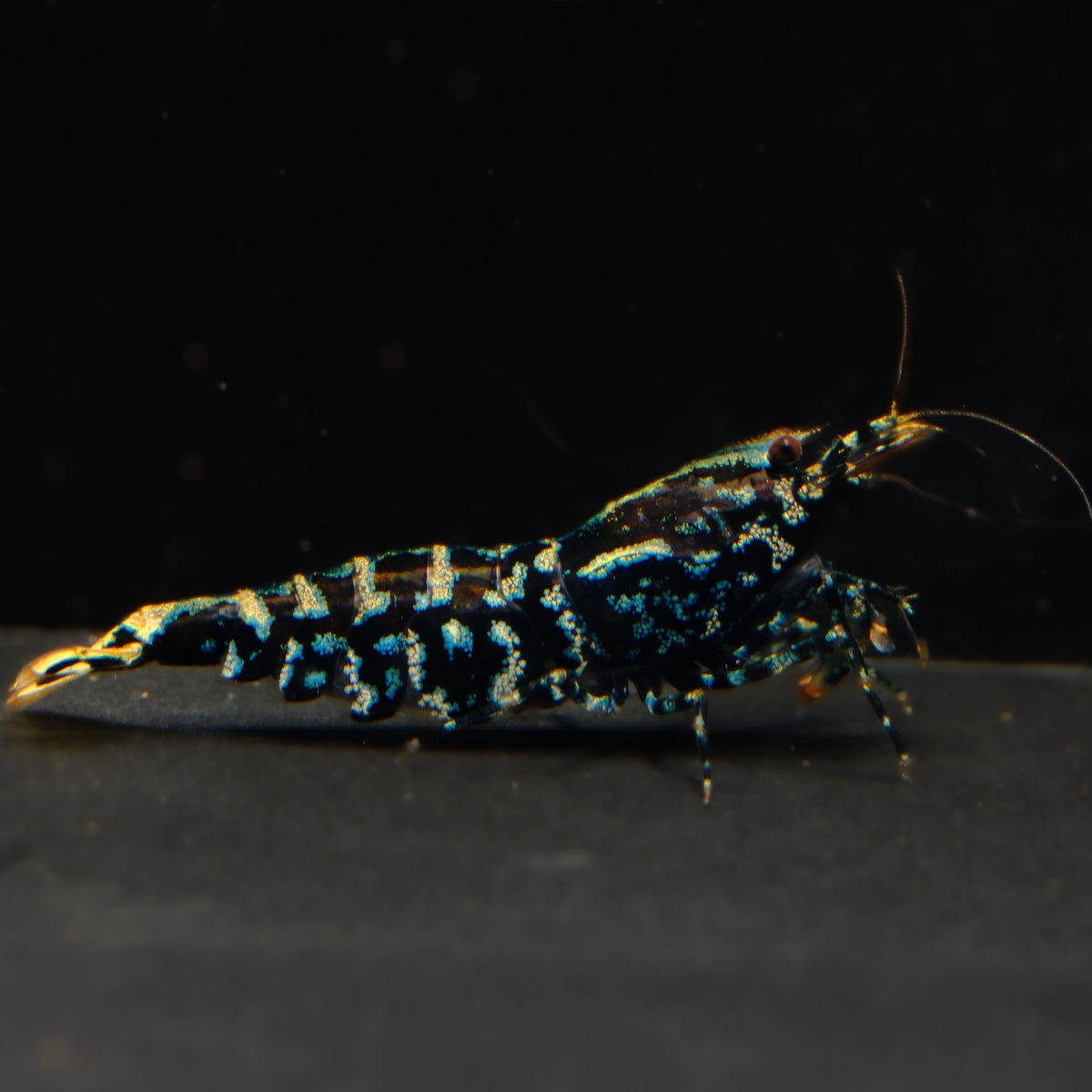
A black-and-white shrimp with a striped back and fine white speckles across its face.
Arrives young. The pattern sharpens as they grow, and on many of them the white takes on a green or blue metallic tone once fully grown.
One price, no grades. These are the shrimp from our Blue/Green Galaxy Boa and Black Snowflake Fishbone breeding that did not make those lines’ grades — the same parents, priced for what they are.
Caridina — needs soft, slightly acidic water, but this is the forgiving line of the family, so it makes a good first Caridina. Numbers in the FAQ.
The Galaxy Fishbone is the classic entry point into Caridina keeping — hardy, forgiving, and genuinely striking. “Galaxy” in the hobby means a shrimp with white spots across the head and cheeks; the Boa and Snowflake lines were refined out of it, and a Galaxy Fishbone is the shape they started from: a black body, a ladder of white down the back, and speckled cheeks.
Ours come out of our Blue/Green Galaxy Boa and Black Snowflake Fishbone programs — the shrimp that did not reach Boa head coverage or the Snowflake “snow skirt”, with those bloodlines still behind them.
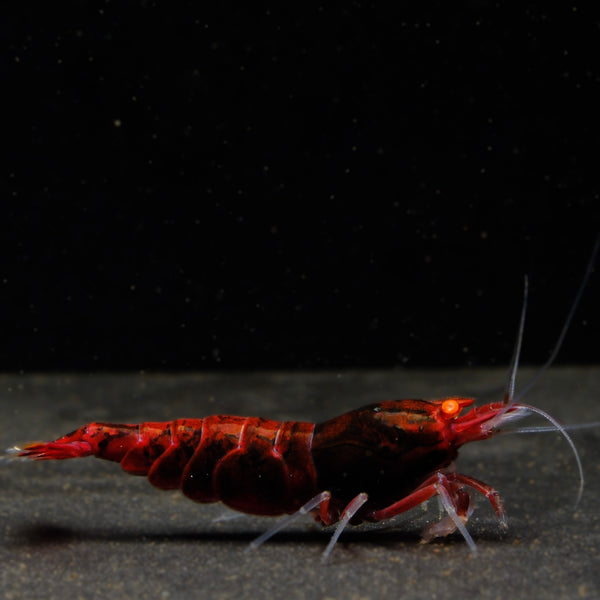
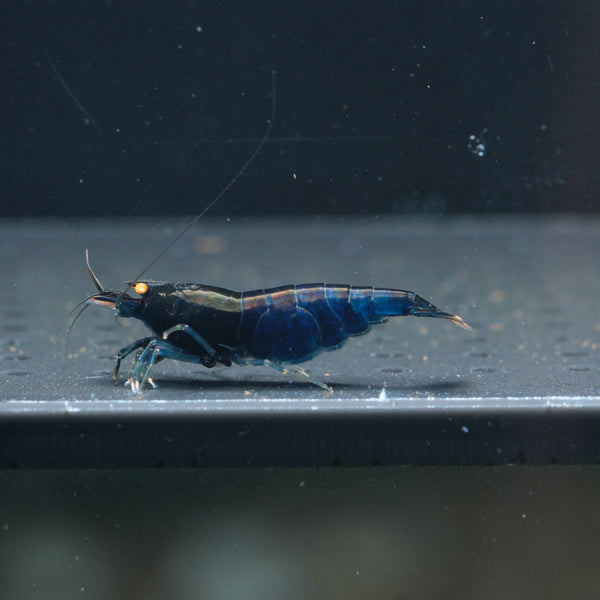
About the photo. The shrimp pictured is one of the best-looking adults from the batch — the target, not the arrival. Pattern and colour both sharpen as they grow.
A mixed pool, and it shows on the shell.
- Pattern: Fishbone clarity and cheek spotting vary from shrimp to shrimp. Some carry a little of the parent lines — a touch more white on the head, or the first belly speckling.
- Tone on the white: The black base never changes. On many, the white takes on a green or blue metallic tone with maturity — the same tone the parent lines carry, usually fainter.
- Spider legs: The body pattern carried onto the legs — black patches with white. Solidity follows the shell, so it is hit and miss on this line.
We grade by the traits that genuinely vary within a batch, and price each grade for what it is. These shrimp have already been graded once — out of the Boa and Snowflake tanks they came from. What is left is a mixed pool with the same genetics behind every shrimp, so we sell it as it is.
So Black Galaxy Fishbones are one grade, one price — the parents’ bloodlines at the entry price.
The photo shows a high-grade or best-looking adult from the batch. We ship unsexed juveniles, 0.6–1.2 cm — too young to tell male from female. Shrimp arrive pale from the trip and colour back up within days. For detailed water parameters, tank setup guides, and our 100% Live Arrival Guarantee, see our FAQ.
Guarantee & dispatch
Live arrivalClaim within 8 h
Claim within 8 hours of delivery with photos and a short video, ideally of the sealed bag. Your choice of a refund of the livestock value, free replacements, or store credit — all at no cost to you.
Mon & TueDispatch days
0.6–1.2 cmUnsexed juveniles
10+ of one lineColony starter
Unsexed juveniles at ten all but guarantee both sexes — about 1 in 500 odds of a single-sex group, against 1 in 8 at four — and a group settles faster than a pair. Our 10+ and 20+ prices are built around that. Give them longer than Neocaridina — Caridina breed more slowly on buffering soil and reward stability over tinkering.
We don't ship live shrimp to WA, TAS or NT — message us for further enquiries: Messenger, Instagram or WhatsApp.
Full guarantee policy →Water parameters — Caridina
TDS
100 – 150 ppm
Total dissolved solids — the quickest single number to check. Ours is what they are raised in: match it on arrival, then keep it steady. Swings hurt more than the number itself.
GH
4 – 6 dGH
General hardness — the calcium and magnesium they build shells with. Too little and moults fail; too much and shedding gets hard.
KH
0 – 1 dKH
Carbonate hardness — the buffer that stops pH drifting between water changes.
pH
5.5 – 6.5
Set by your substrate and KH far more than by dosing. Hold it steady inside the band rather than chasing a number.
Temp
20 – 24 °C
Cooler slows moulting and breeding; warmer speeds everything up and shortens lives. Stay inside the band.
Tank
30+ L
The minimum for a settled colony. A bigger tank holds its water steadier, so we recommend larger groups in larger tanks — stability is what keeps shrimp alive.
Buffered RO water on an active substrate — near-zero KH is correct here, not a fault.
Full care & acclimation guide →