Bee & tiger shrimp

Blue Devil Shrimp

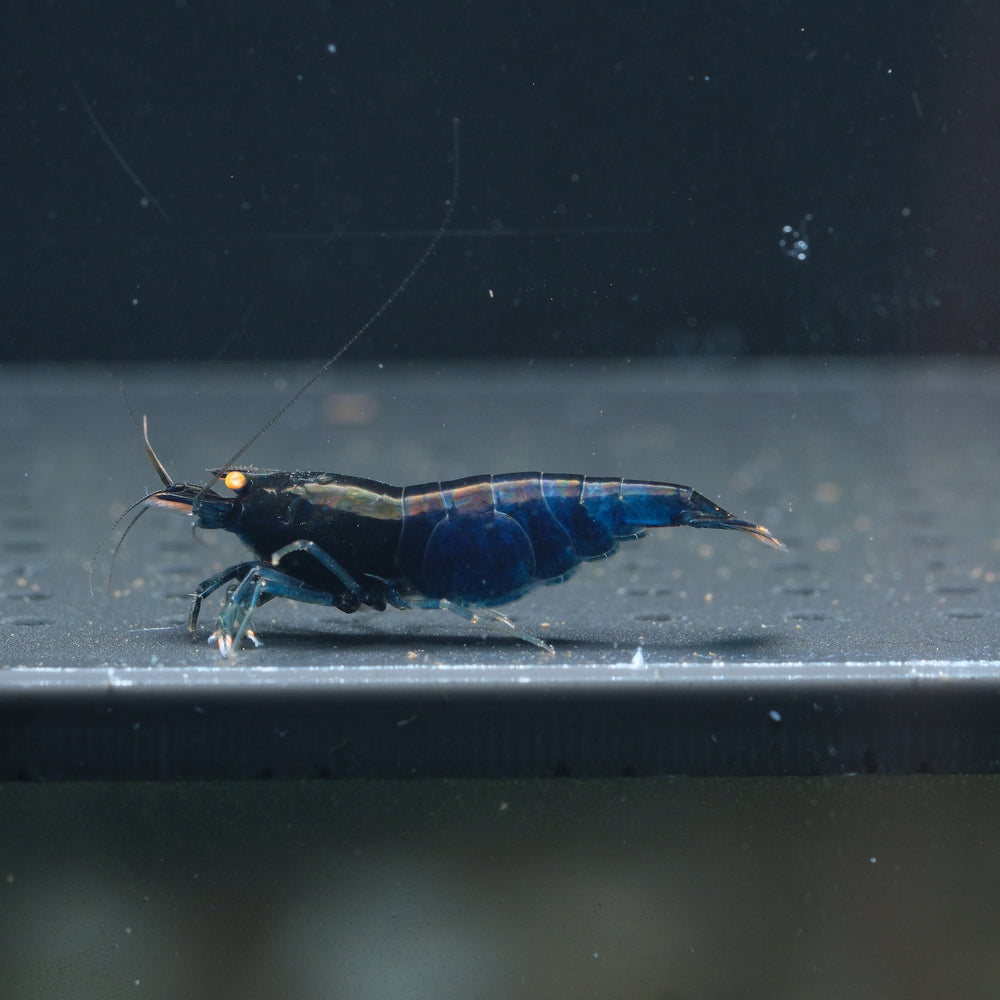
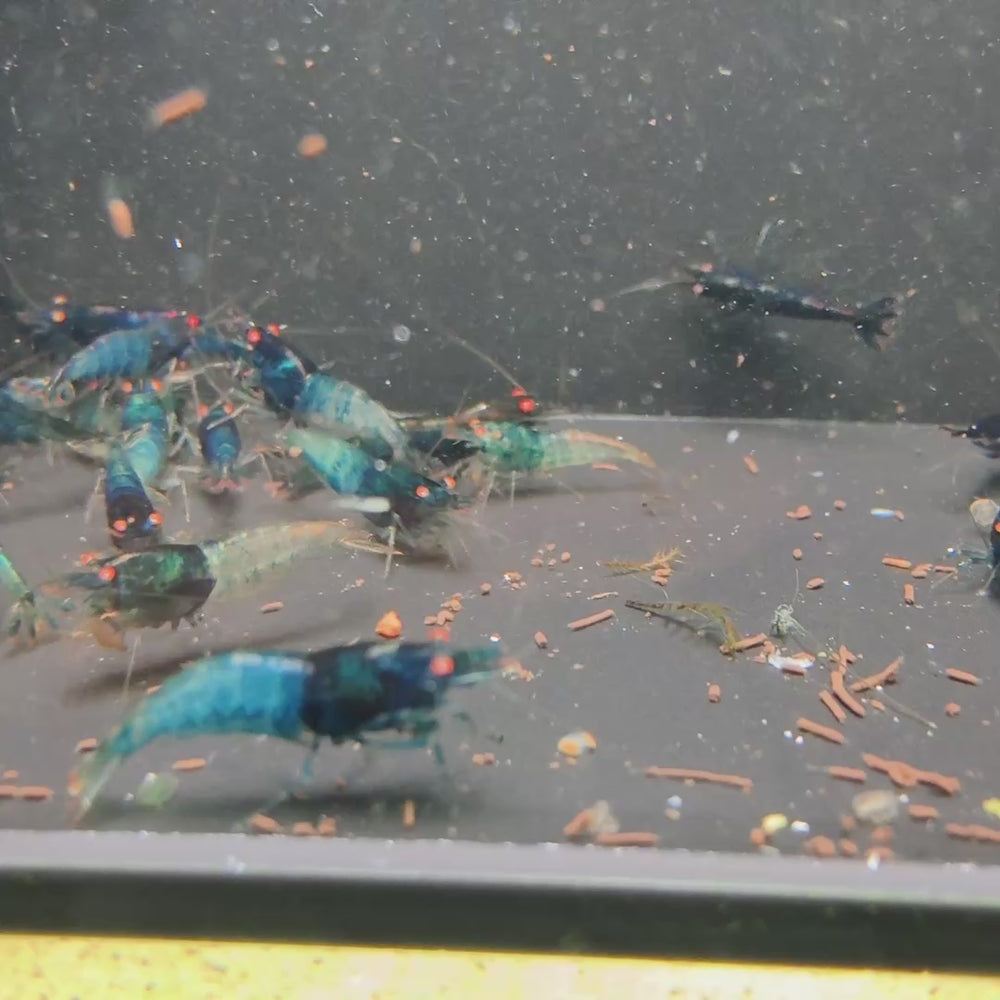
A deep blue Caridina with glowing orange eyes instead of the usual black. Bred in our Sunshine breeding room.

Sold as unsexed juveniles, 0.6 to 1.2 cm.

Choose how many

Blue Devil ShrimpPre-order

$45.00 AUD per shrimp

Shrimp total$45.00

1 shrimp

You get a clip of your shrimp before dispatch day.

ShipsMon or Tue ArrivesBy express post Covered96 h in transit

Dispatched on Mondays and Tuesdays.

$25 express, free from $180 Delivery details

We only ship live animals toACTNSWQLDSAVIC

We can't ship live animals toWANTTAS

Message us for further enquiries

A line worth getting to know

About the line & photographs

The Blue Devil is our name for an orange-eyed blue Caridina a heavy, opaque blue shell from the Blue Steel and Blue Bolt family, carrying the orange-eye (OE) mutation. In an OE shrimp the eye lacks its dark pigment and shows orange instead. Against a dense blue shell the contrast is strong. About the photo. The shrimp pictured is one of the best-looking adults from the batch. At juvenile size...

Photographs show reference adults. As the supplied juveniles mature, shell density, head coverage and colour keep developing with each moult.

Explore colour, lineage & development

The details, when you need them

Appearance & grading

What this line looks like, how it develops, and how the grades differ.

Colour, lineage & development

Blue Devil Shrimp (Orange Eye Caridina) | Single Grade Colony

A deep blue Caridina with glowing orange eyes instead of the usual black.

The orange eye is there from birth. The blue arrives lighter and thickens with every moult (the skin they shed and grow out of every few weeks).

One price, no grades. Shell density varies across the batch, and every one of them darkens with age.

Caridina, and one of the fussier ones. It needs purified (RO) water with minerals added back, and a buffering soil. Numbers in the Water panel below.

The Blue Devil is our name for an orange-eyed blue Caridina: a heavy, opaque blue shell from the Blue Steel and Blue Bolt family, carrying the orange-eye (OE) mutation. In an OE shrimp the eye lacks its dark pigment and shows orange instead. Against a dense blue shell the contrast is strong.

About the photo. The shrimp pictured is one of the best-looking adults from the batch. At juvenile size the blue is lighter. It packs in and darkens with each moult, as on any blue Caridina line. The eye colour is there from the start. Adults are available on request.

Two traits, on two different schedules:

  • The orange eye: Fixed from birth. It is a recessive mutation (both parents must carry it), so it takes deliberate line-breeding to hold in a colony, and it does not change with age or water.
  • The blue: Builds over time. Juveniles land lighter and more see-through, and the pigment packs in with each moult, so the older the shrimp the deeper the blue. Poor water costs blue and stable water keeps it.

We grade by the traits that genuinely vary within a batch. Here shell density does vary. The deepest individuals show heavy, opaque blue from juvenile size and others start lighter, but all of them darken with every moult and every one carries the orange eye. Splitting that spread into tiers would grade age alone.

So Blue Devils are one grade, one price.

Unlike a cherry shrimp, this line needs reverse osmosis (RO) water: tap water run through a filter that strips everything out, so you control exactly what goes back in. Add a Caridina-specific GH+ mineral to reach GH (general hardness) 4 to 5 and TDS (total dissolved solids) 100 to 120, and keep them on an active buffering soil that holds pH at 5.8 to 6.5. That combination gives the soft, slightly acidic, very stable water these shrimp need.

The photo shows a high-grade or best-looking adult from the batch. We ship unsexed juveniles, 0.6 to 1.2 cm, too young to tell male from female. Shrimp arrive pale from the trip and colour back up within days. For detailed water parameters, tank setup guides, and our 100% Live Arrival Guarantee, see our FAQ.

Water & care

The water they need, how to settle them in, and the first few days.

Water, care & arrival acclimation
pH
5.5–6.5
GH
4–6 dGH
TDS
100–150 ppm
KH
0–1 dKH
Temperature
20–24 °C
Tank
30+ L

Buffered (RO water).

Drip-acclimate slowly, adding tank water a little at a time. Float the sealed bag for 10 to 15 minutes so the temperature matches, then drip tank water over an hour or two. Care & acclimation guide

Photograph and video any affected animals promptly and contact us within 8 hours of delivery. Arrival cover does not extend to deaths after acclimation begins.

First days & common questions
Before you buy 8 quick answers
What actually turns up in the bag?

Unsexed juveniles, 0.6 to 1.2 cm, about the size of a grain of rice and too young to tell male from female. Shipping at this size gives the best survival and the easiest adaptation to your water, and you always end up with both sexes. Adults are available on request at roughly twice the juvenile price.

Will they look like the photo?

Not on day one. The photo shows a high-grade or best-looking adult from the batch. The shrimp you receive is young and still filling in. The colour packs in with each moult, the white thickens, and on the patterned lines the tone the white takes on (blue, green, orange or pink) arrives with maturity. The body's base colour, red or black, never changes. Every shrimp is an individual, so no two carry exactly the same pattern.

What does the grade mean?

The grade describes appearance and says nothing about health. An Entry shrimp is as healthy as a Collector one and comes from the same parents. It shows less of the pattern and has more flaws in it. What we grade on differs by line, and the Grading panel above spells it out for this one. We grade by eye at shipping size, and shrimp rarely move a grade as they grow. If you know the hobby's letters, Entry is roughly S, Mid SS, High SSS.

Can I keep them in my water?

If your tank matches the water card above, yes. Bee and tiger shrimp (Caridina) want soft, slightly acidic water, which in practice means purified (RO) water with a shrimp mineral added back, over an active buffering soil that holds the pH down, in a tank that has been running a while. A near-zero KH is normal for this water. They are a step up from a first shrimp and very stable once the tank is right.

Full care & acclimation guide
They arrived pale and barely moving. Is that normal?

Yes. Every shrimp arrives pale from the trip and colours back up within hours to a few days. Float the bag, then drip your tank water into it slowly over an hour or two before releasing them, so the water changes gradually. If any animal is dead on arrival, photograph it in the unopened bag and contact us within 8 hours of delivery. The Live Arrival Guarantee covers it.

Live arrival guarantee and DOA policy
How do they travel?

Express post only, bagged with oxygen and insulated, dispatched on Mondays and Tuesdays so no animal sits in a depot over a weekend. We deliver to your door, a PO box or a parcel locker; collect it the day it arrives. Parcels left by safe-drop are not covered. We cannot send live animals to Western Australia, the Northern Territory or Tasmania.

Shipping policy
How many should I start with?

Ten is the sensible minimum for a colony that breeds. With unsexed juveniles it all but guarantees both sexes, and a group settles faster than a pair. Our volume prices are built around that. Mixing colours of the same genus in one tank looks fine, but they will interbreed and the offspring drift back toward wild colouring. Keep one colour per tank if you want to keep the line.

What do I do in the first 24 hours?

Lights off, bag closed. Float the sealed bag in the tank for 10 to 15 minutes so the temperature matches. Darkness lowers stress.

Drip, don’t pour. Drip tank water into the bag slowly. A sudden change in TDS, GH or pH is the number-one cause of losses in the first week.

Something wrong? Photograph and video the unopened bag and email us within 8 hours. The Live Arrival Guarantee covers a replacement or a refund of the livestock value.

Full care & acclimation guide

Delivery & ordering

Where we send, how it travels, arrival cover and pre-orders.

Delivery, restrictions & live-arrival cover

$25 Express post, free on orders of $180 or more (soil, stone and wood excluded).

We deliver to your door, a PO box or a parcel locker. Collect it the day it arrives, because any claim needs to reach us within 8 hours of the delivery scan. Parcels left by safe-drop are not covered.

Packed insulated, with a heat or cold pack when the weather needs it. We dispatch on Mondays and Tuesdays. Express delivery usually takes 1 to 3 business days, though Australia Post does not guarantee it. Dry goods ordered with livestock travel in the same box, for the one Express post price.

If any animals arrive dead, send your order number, clear photos and a short video within 8 hours of the delivery scan, ideally of the sealed bag. You choose a refund, free replacements with your next order, or store credit.

  • Under 96 hours (4 days) in transit: full cover
  • More than 96 hours: outside the guarantee, but contact us and we will work something out

Full DOA & missing items policy

Pre-order costs, timing & cancellation

A pre-order is a one-off purchase, not a subscription. You can pay a deposit or pay in full. If you pay a deposit, we email you before charging the balance to the same card ahead of your shipping date.

Tell us when your tank is ready (reply to your order email or email support@shrimpzone.com.au) and we dispatch on the next Monday. The weather has to be safe to travel, and we tell you if it delays it.

Cancel any time before dispatch for a full refund of your deposit. To cancel, email support@shrimpzone.com.au with your order number.

Full policies: Shipping Arrival & missing items Refunds